Wordle!
- 4.4
- Rating
- 10.00M
- Installs
- Free
- Price
 Analysis by App-foxy
I like word games that let me begin immediately, give me something meaningful to think about, and finish before the session becomes a commitment. That is the appeal of Wordle!, a free word game from Lion Studios Plus. It takes the familiar daily word puzzle idea and turns it into a compact routine: I make a word attempt, study the feedback, adjust my next guess, and eventually either solve the puzzle or accept that the day’s challenge got the better of me.
That simple loop is easy to understand, but the interesting part is how much judgment it asks from the player. I am not just searching for letters at random. I have to decide whether a useful guess should test several new letters, whether a confirmed letter belongs in a different position, and when a tempting possibility is worth risking. The game is free, rated for Everyone, and belongs firmly in the word-puzzle category, so it is accessible to casual players as well as people who enjoy turning a short daily activity into a personal challenge.
After spending time with it, I see the game as best suited to people who enjoy deduction more than speed. It is not a large word adventure, a competitive vocabulary course, or a collection of long crossword-style boards. Its strength is the narrow focus. I can open it during a coffee break, make progress with a few deliberate choices, and close it without feeling that I have abandoned a complicated campaign.
You May Also Like

 Blood Strike: 2.5 Anniversary
Blood Strike’s Loadouts Turn Every Drop Into a Tactical Gamble
A close look at Blood Strike’s custom loadouts: how fast access to signature weapons reshapes its battle royale rhythm, rewards preparation, and narrows the gap between fights.

 Pandora - Music & Podcasts
Pandora’s Music Is Easy to Start, but Harder to Recover
Pandora’s strength is its low-effort path from a seed to a station. Its weak spot is how much confidence it asks you to place in connection, setup, and quiet recovery.

 8 Ball Pool
 Is Built on Rivalries, Rematches, and Routine
A close look at the rivalries, rematches, shared routines, and unanswered safety questions that turn a quick pool match into a persistent mobile community.

 Samsung Music
’s Quiet Strength Is Playing What You Already Own
Its reach comes less from spectacle than from dependable access to a personal library. That simplicity is both the app’s strongest retention engine and its ceiling.

 AccuWeather: Weather Radar
AccuWeather Review: A Quick, Clear Forecast for Everyday Decisions
For everyday plans, the best forecast is the one you can understand quickly. AccuWeather makes rain timing, radar, and local conditions easy to act on, with a few trade-offs.

 Hill Climb Racing
Why Hill Climb Racing Still Turns Crashes Into One More Run
A tiny car, a bumpy hill and one more upgrade: Hill Climb Racing keeps resurfacing because its simple chaos makes every near-miss feel personal.
More From Our News Desk



How the first guess sets the whole puzzle in motion
I start each puzzle by choosing a word that can teach me something, not just one that feels likely to be the answer. That first decision shapes how I read the clues afterward, so I’ll look at a few practical ways to make an opening guess useful without turning a quick game into homework.
The opening move is more important than it looks
The first action is choosing a word. That sounds obvious, but it creates the entire information structure for the session. A cautious player may choose a familiar word, while a more analytical player will look for an opening that checks several useful letters. I prefer a word that gives me broad information rather than one chosen only because it is likely to be the answer.
This is where the game feels different from a basic anagram toy. The first guess is not merely an attempt to win. It is also an experiment. I am trying to learn which letters matter and where they might fit. Even an unsuccessful opening can be valuable if it removes several weak possibilities from consideration.
That design makes the game approachable for newcomers. There is no complicated tutorial to absorb before the first meaningful decision. At the same time, experienced players can create their own opening habits. The important trade-off is that a familiar starting word may feel comfortable but reveal less than a carefully selected test word. I would not treat one opening strategy as universally correct; the best choice depends on whether I want a calmer solve or a more information-heavy start.
Feedback turns guessing into deduction
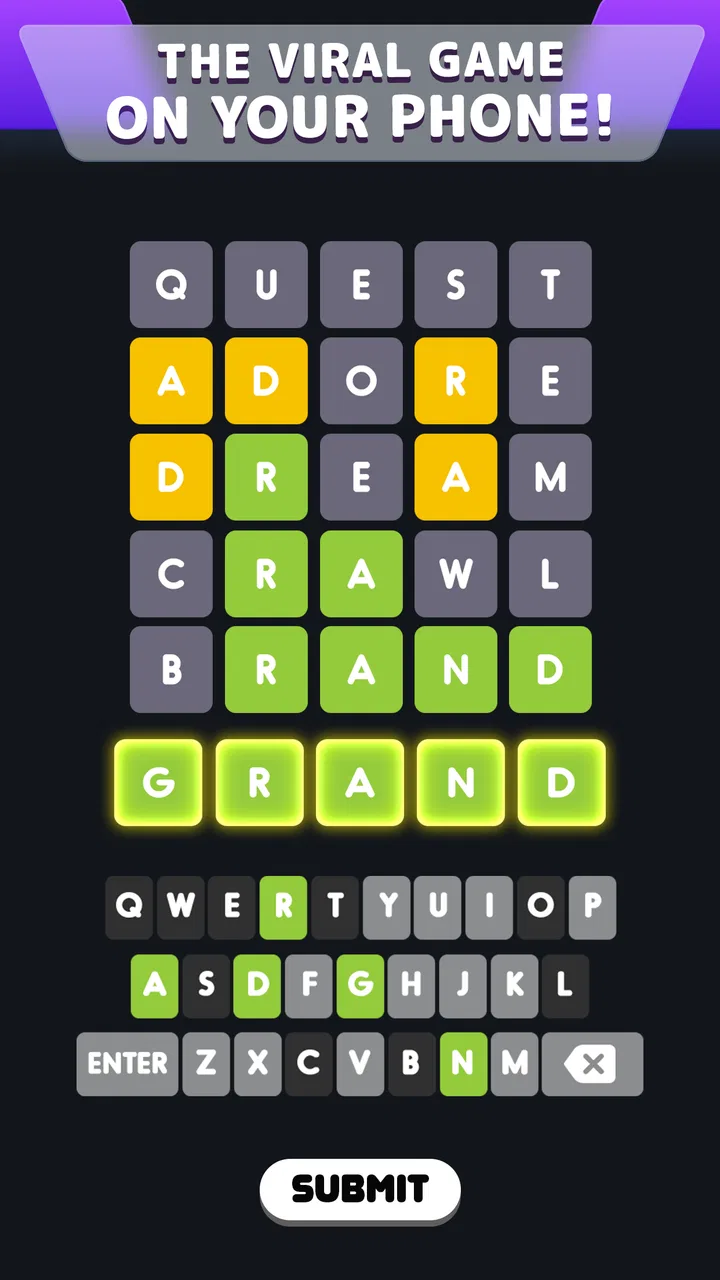
After submitting a guess, the letter feedback becomes the real conversation between the game and the player. Correctly placed letters narrow the answer sharply. Letters that belong elsewhere suggest a rearrangement. Letters that do not help remove entire branches of thought. The pleasure comes from watching a vague search become a smaller, more manageable problem.
I found that the feedback is most useful when I pause instead of immediately typing another word. A quick second guess can waste an opportunity if I have not considered the positions already revealed. Taking a moment to write the known pattern mentally, then listing possible words around it, usually produces a stronger next move.
One subtle challenge is that a useful guess is not always the word I think might be the solution. Sometimes the smartest move is a testing word that checks several unconfirmed letters. That can feel risky because it may not appear to advance the answer directly, but it often prevents me from repeating the same assumptions. This is one of the game’s strongest lessons: progress can mean gaining information, not only getting closer visually.
The rhythm of a good session
The feedback rhythm gives each turn a clear purpose. I act, receive a compact response, reconsider the evidence, and act again. Because the cycle is short, mistakes are easy to understand. If I use a guess that tells me almost nothing, I can identify the problem in my own reasoning rather than blaming a complicated interface.
That rhythm also explains why the game can be relaxing and frustrating in equal measure. A promising pattern creates momentum, especially when several letters begin to lock into place. On the other hand, a puzzle can stall when I have a few plausible answers and no obvious way to separate them. At that point, the game asks for disciplined elimination rather than inspiration.
For everyday use, this makes it a good fit for a short break. I can play while waiting for a train, during a quiet lunch, or at the end of the day when I want something mentally active but not demanding in the way a full game is. I would not recommend opening it when I need a completely passive distraction, because the core enjoyment depends on paying attention to the clues.
Why the reward is more than simply solving
The obvious reward is finding the answer, but the more lasting reward is understanding why the answer became reachable. When I solve a puzzle after changing my approach, the satisfaction comes from the deduction. I may have started with a broad letter check, then used the feedback to test a position, and finally recognized the only sensible word that fit the pattern.
There is also a smaller reward in improving the quality of my guesses. A failed attempt can still feel productive if it eliminates a useful group of letters. That is important because it keeps the game from becoming a simple win-or-lose test. The player can measure progress by better reasoning, not just by a successful final entry.
For people who enjoy sharing puzzle habits with friends or family, the daily structure gives the experience a natural conversation point. I can compare how quickly someone identified a pattern, discuss an opening strategy, or laugh about overlooking an obvious word. I would keep those comparisons friendly, though. The game is more enjoyable when the result is treated as a personal challenge rather than a serious test of intelligence.
Small habits that improve the experience
My most useful habit is separating confirmed information from assumptions. If a letter appears to fit, I do not treat it as certain until the feedback supports it. This avoids the common trap of building an entire solve around a word that merely feels likely.
Another helpful approach is to use a deliberate “information guess” when several answers look possible. Instead of choosing one candidate and hoping, I choose a valid word that tests letters shared or disputed by the remaining options. This can sacrifice the chance of an immediate solve, but it often makes the next decision much clearer.
I also try not to overvalue unusual vocabulary. When I get stuck, my mind tends to search for obscure words because they seem clever. In practice, that can distract me from ordinary words that fit the evidence better. The game rewards careful reading of the feedback more consistently than showing off a large vocabulary.
These habits are not hidden modes or extra systems; they are ways of using the game’s central feedback more intelligently. That distinction matters. Someone looking for a deep collection of tools, adjustable rule sets, or a long progression system should not expect this title to provide that kind of structure. Its depth comes from decision-making within the same compact format.
The reset is part of the design
Once the puzzle is complete, the session has a natural stopping point. That reset is one of the reasons the game fits into daily life so well. I do not need to decide whether to continue through another level, manage a growing list of objectives, or remember where I left a lengthy story. The current challenge ends, and the reason to return is the next daily word puzzle.
This also creates a useful boundary for players who are trying to avoid endless scrolling. A short word session can replace a few minutes of aimless phone use because it has a beginning, a problem to solve, and a clear conclusion. The limitation is that players who want an unlimited stream of fresh boards may find the daily format restrictive. If I finish the puzzle and still want a long word-game session, I need a different kind of app.
The reset can be emotionally effective too. A difficult puzzle does not permanently damage the experience. The next session gives me a clean start, so I can return without carrying a complicated backlog. That makes failure easier to accept than in games where a poor decision affects a campaign or a ranking.
What the free model means in practice
The game is free to download and play, with in-app purchase items ranging from $0.99 to $99.99. That range is worth noticing before installing, even if a casual player intends to spend nothing. I would approach the purchase options carefully and decide in advance whether I am happy treating the free experience as sufficient.
For me, the main value is in the puzzle loop itself, not in buying my way through a challenge. A word puzzle loses some of its satisfaction if the pressure to solve it is removed too easily. Anyone considering a purchase should ask whether it adds convenience they genuinely want or simply weakens the reason they opened the game. Parents may also appreciate that the content rating is Everyone, while still keeping normal attention on purchases made from a shared device.
The game has reached over 10 million installs and holds a 4.1 average from around 178 thousand ratings, which suggests that its straightforward format has found a substantial audience. Those figures do not change the personal fit, though. Popularity cannot make a daily puzzle enjoyable for someone who dislikes deduction, and a modest-looking word game can still be a strong choice for someone who wants exactly this kind of mental break.
Where it stands beside familiar alternatives
Compared with a crossword, this is quicker to enter and less dependent on broad clue knowledge. A crossword gives me a larger board and more varied relationships between answers, while this game concentrates all attention on one word. I prefer the smaller format when I have only a few minutes, but I would choose a crossword when I want a longer, more layered puzzle.
Compared with a traditional word search, the experience is more analytical. A word search asks me to locate visible words in a grid; this game asks me to infer a hidden answer from responses to my own attempts. Players who enjoy scanning and spotting patterns may find the deduction here less immediately comfortable, while people who like narrowing possibilities may find it more rewarding.
It also differs from an open-ended vocabulary game. There is no need to produce a stream of words for points or build a large collection of accepted answers. The focus stays on one solution and the route toward it. That focus is a strength for short, purposeful play, but a weakness for anyone who wants variety within a single sitting.
Who should play it, and who should skip it
I would recommend it to casual word-game players, people who enjoy daily routines, and anyone who likes puzzles that reward patience. It is especially suitable for a household where different ages can understand the basic rules quickly, since the age rating is Everyone and the controls are uncomplicated.
I would be more cautious about recommending it to someone who needs constant novelty, fast action, or a large amount of content in one session. It may also disappoint players who expect a full word-learning tool. Solving a puzzle can expose me to words I do not use often, but the game’s purpose is deduction rather than structured vocabulary teaching.
Players who dislike repeating a daily routine should consider that limitation before installing. The reset is satisfying when I want a contained challenge, but it can feel narrow when I am looking for a long evening game. In that situation, a crossword collection, an unlimited word puzzle, or a more expansive vocabulary game would be a better match.
Device details and practical expectations
The current version is 2.6.3, and the game supports devices running Android 7.0 or later. That makes it suitable for a broad range of Android phones and tablets that are still on compatible software. I would still check the device’s available storage and system settings before installing any game, especially on an older phone where general performance may already be limited.
Because the experience is built around short entries and visual feedback, a large screen is not essential. A phone is enough for the normal session, which supports the game’s role as a portable break. A tablet may make the board more comfortable to view, but it does not fundamentally change the puzzle. The important question is not hardware power; it is whether the player enjoys the daily deduction format.
My verdict on the complete loop
The action is clear: choose a word and commit to it. The feedback is immediate enough to shape the next decision. The reward comes from turning scattered clues into a confident answer. Then the session resets, leaving a clean reason to return rather than an obligation to keep playing.
That loop is why I find the game easy to recommend with a qualification. It is strongest as a focused daily word puzzle, not as an unlimited all-purpose game. I enjoy it when I want a small challenge with a definite endpoint, and I appreciate that a failed solve can still teach me something about my guessing habits. I would look elsewhere for extensive modes, long progression, or a constant supply of boards in one sitting.
Lion Studios Plus has kept the central idea uncomplicated, and the result works because every guess matters. The free entry point makes it easy to try, the Everyone rating keeps it broadly approachable, and the established player base shows that the format has lasting appeal. My advice is to begin with a thoughtful opening word, treat every response as evidence, and resist guessing merely to keep the turn moving. If that kind of careful, repeatable challenge sounds satisfying, this is a very good small game to keep in a daily routine.
FAQs for Wordle!
01What is Wordle and how does it work?
Wordle is a popular word puzzle game where players have six attempts to guess a five-letter word. Each guess provides feedback through colored tiles indicating correct letters and their positions. It's a simple yet challenging game that enhances vocabulary and problem-solving skills, making it a favorite among word enthusiasts.
02Is Wordle available for both Android and iOS?
Yes, Wordle is available for both Android and iOS platforms. Users can download it from Google Play Store for Android devices and the Apple App Store for iOS devices. The game offers a seamless experience across both platforms, ensuring you can enjoy it regardless of your device.
03Does Wordle require an internet connection to play?
Wordle can be played offline, providing flexibility for users who may not always have access to the internet. However, some features, such as daily challenges or updates, might require a connection. Playing offline allows users to enjoy the core gameplay without interruption.
04Are there any in-app purchases in Wordle?
Wordle is generally free to play, but it may offer optional in-app purchases. These can include hints, additional themes, or ad-free experiences. While these purchases can enhance gameplay, they are not necessary to fully enjoy the game, as the core experience remains accessible to all users.
05Can I play Wordle with friends or compete against others?
Wordle primarily focuses on solo gameplay, but many players enjoy sharing their results or challenging friends by comparing scores. While there isn't a direct multiplayer mode, the social aspect comes from discussing strategies and outcomes with others, fostering a community feel around the game.
Pros
- Simple and addictive gameplay.
- No registration required.
- Daily puzzles to keep you engaged.
- Clean and minimalistic design.
- Supports multiple languages.
Cons
- Limited to one puzzle per day.
- No hint system available.
- Can be frustratingly challenging.
- Requires internet connection.
- No customization options.

Wordle!
Gallery